Stop Swinging Your Toddler by the Hands — Here's What It's Actually Doing...
10-SECOND TAKEAWAY
Children aged 2–5yrs are vulnerable to Nursemaid's Elbow — a painful joint injury caused by lifting or swinging them by the hands
It's the most common elbow injury in kids under 5, and it often happens during playful moments like the "1-2-3 wheee!" swing
The fix is simple: always lift under the armpits or around the torso, never by the hands
Share this with grandparents, helpers, and anyone who plays with your child
DISCLAIMER: This article is educational and not medical advice.
You know the moment. You grab both little hands, count "1-2-3, wheee!", and swing them up into the air. They shriek with laughter. Grandma does it every single time she walks in the door. It's one of the most normal, most photographed, most loved parenting moments there is.
It's also one of the most common ways toddlers end up with a sudden, painful elbow injury — and almost nobody warns you about it before it happens to your family.
We're going to give you the two-minute version first. If that's all you need, stop there — you'll walk away knowing exactly what to do. If you're the kind of parent who wants the "why," we've put the research, the nuance, and the questions we get asked most further down.
Part One: What You Must Know
If your child is 2–5, avoid lifting or swinging them by the hands. It can cause a common, painful injury called Nursemaid's Elbow. The fix is simple: lift from under the armpits or around the torso instead.
That's genuinely the whole thing. Here's it broken down so it sticks...
The Habits to Drop
Lifting your child up by one hand or both hands — that vertical "up you go!" swing
Swinging them by the hands, even if they're laughing (especially if they're laughing, honestly — that's usually how this happens)
Playing games that pull on a straight arm, including the classic "swing between two adults holding hands"
Why It Happens
A sudden pull on a straightened, twisted arm can make a small bone near the elbow slip slightly out of place. That's Nursemaid's Elbow, and it happens because of anatomy. The ligament holding that bone in place is simply looser in young children than it is in older kids and adults. It's a phase, not a parenting failure, but still essential to understand.
What It Looks Like
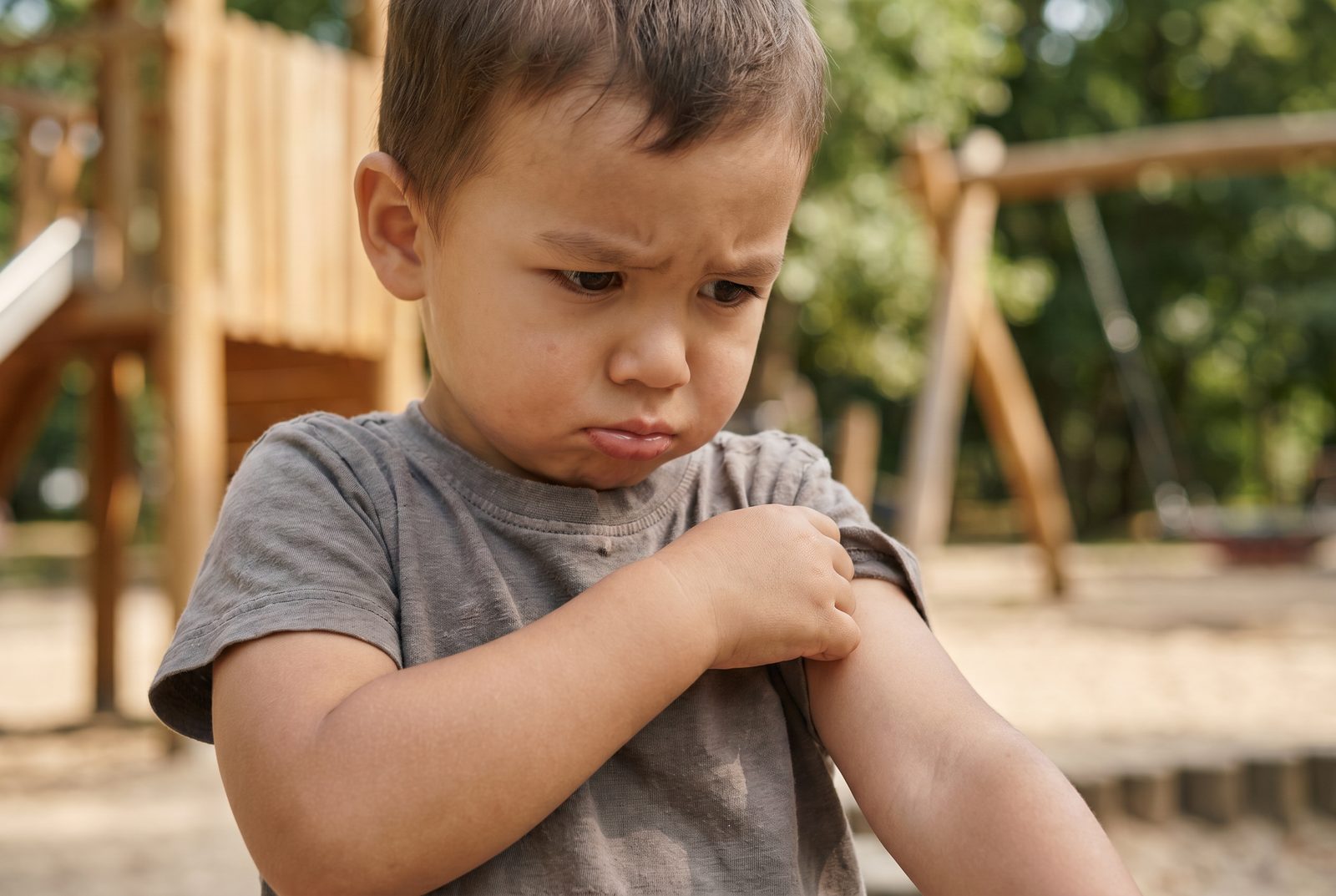
A sudden cry right after the lift, swing, or pull
Your child stops using that arm — no reaching, no waving, no holding toys
They hold the arm still and close to the body, often slightly bent
Often no swelling, no bruising — which is exactly why it's easy to miss
Sometimes kids point to the wrist or forearm rather than the elbow, even though the elbow is where the injury actually is
What to Do
Stop the activity immediately
Get them checked promptly by a qualified healthcare professional
Don't force movement or try to test the arm yourself
The Easy Swap
You don't have to give up the fun, silly-lift, birthday-party energy. Just change your grip:
Lift under the armpits or around the torso
For big lifts, support them at the trunk, not the hands
Want a swinging game? Swing from a secure hold around the torso, or pick a game that doesn't pull on straight arms
Same giggles. Same "wheee." Just a safer grip underneath it.
The one thing to remember: don't lift your child vertically by the hands.
Send this to the next person about to swing your toddler by the hands — before it happens, not after. It's one of those "everyone means well, but nobody told us" tips that's worth ten seconds of someone's time.
Part Two: The Deeper Dive (for the parents who want to know more)
If you've ever wondered why toddlers specifically, why the elbow specifically, or whether a "quick fuss that seemed to sort itself out" was actually something — this section is for you.
It's More Common Than Most Parents Realize
Nursemaid's Elbow — medically, radial head subluxation — is the most common elbow injury in children under 5, and it occurs almost exclusively in this age group.[1] It's not a rare fluke; clinical reviews put it at more than 20% of all upper-extremity injuries in young children.[3]
Hospital-record studies looking at thousands of cases have found the peak age sits around 27–28 months, with girls affected somewhat more than boys, and the left arm involved roughly 60% of the time.[2] A large U.S. injury-database study found pulling mechanisms accounted for over a third of all cases, right alongside falls — which lines up exactly with the "sudden pull on an outstretched arm" story most parents describe.[4]
Why the Elbow, and Not the Shoulder or Wrist
It's a fair question — if you're pulling on the whole arm, why does it always seem to be the elbow that takes the hit? The answer is specific anatomy, not bad luck. The ligament wrapped around the head of the radius bone (the annular ligament) is uniquely loose in young children in a way that the shoulder and wrist joints simply aren't. Shoulder dislocations in kids come from a completely different kind of force — the arm forced outward and rotated, or a direct blow — not from vertical traction. Wrist injuries in children are typically fall-related, from landing on an outstretched hand, not pull-related. So while it feels like the whole arm is under strain during a lift or swing, the elbow really is the one true weak point for this specific movement.
The "It Seemed Fine Again" Scenario
Here's something a lot of parents don't know: it's genuinely common for a mild case of Nursemaid's Elbow to pop back into place on its own, before a doctor ever sees it.[6] If your child cried out, held an arm still for a while, and then seemed completely back to normal — that's not necessarily "nothing happened." It may have been a mild episode that resolved on its own.
It's still worth mentioning to your doctor at the next visit, and it's absolutely worth treating as your sign to change the lifting habit going forward — because once it's happened once, the same ligament tends to stay a little looser. Recurrence happens in roughly 27–39% of children who've had it before.[6] So a "quick fuss that sorted itself out" isn't a green light to keep doing the same lift — if anything, it's the opposite.
The Reassuring Part
This is genuinely one of the more forgiving injuries in pediatrics. It's rarely serious, doesn't require imaging in most cases, and one large study of over 88,000 children diagnosed with it found a missed fracture in only 0.3% of cases.[5] Reduction (putting it back in place) is quick, usually needs no sedation, and most kids are using the arm normally again within minutes of treatment.
Does It "Outgrow" Itself?
Mostly, yes. It becomes much less common after around age 5, because the ligament naturally thickens and strengthens with age.[3] That said, we'd still steer away from lifting or swinging kids by the hands as a general habit at any age — old habits are hard to unlearn once your child hits a growth spurt, and there's simply no upside to keeping the habit around.
A Quick Note from Minisport
This isn't just a parenting tip — it's part of how we run classes safely. When we onboard new coaches, we train them on safe child handling and transitions, including avoiding arm pulls and lifts, as part of our broader safeguarding and in-class safety protocols. It's one of the small details that helps keep sport fun, confident, and safe for young children.
References
AMBOSS Knowledge Base. "Radial head subluxation."
Vitello S, Dvorkin R, Sattler S, Levy D, Ung L. "Epidemiology of Nursemaid's Elbow." West J Emerg Med. 2014;15(5):554-557.
Rudloe TF, et al., as reviewed in NCBI StatPearls, "Nursemaid Elbow."
Irie T, et al. "Trends and epidemiology of radial head subluxation in the United States from 2004 to 2018."
Farion KJ, et al. "Management and Outcomes of Children With Nursemaid's Elbow." ScienceDirect.
The most common elbow injury in toddlers comes from the most innocent moment — swinging them by the hands. Here's the science, the signs, and the simple swap every parent needs to know.
Our brand-new Minisport Hub is officially open, offering summer camps, weekend drop-ins, and Term 1 classes in a fun, safe, and modern environment. We’re also excited to share we have introduced cricket to term 1, refreshed our coaches’ first aid skills, and enjoyed a team day out. Plus, we’re expanding globally — Minisport Taiwan is launching soon!
While caffeine is a common part of many adults’ daily routines, even small amounts can pose serious health risks for young children. This guide explains why children are especially vulnerable to caffeine’s effects, outlines safe intake limits by age group, and helps parents make informed choices to protect their child’s health.
Flying with a toddler is often a recipe for stress — but it doesn’t have to be. From navigating HKIA’s busy terminals to keeping your little one entertained at 30,000 feet, this guide shares surprising hacks to make your next flight smoother and preserve your sanity.
In this post, we break down our new graduation system, our three development pillars, why the programme now ends at age five, and what’s changing in Term 1 — from themed games and app resources to new coaches, new equipment, and free beach events for Term 1 enrolled families.
We've all said it. But does telling your child "to act their age" actually work? We look at the psychology behind age-based expectations — and the hacks that actually get results.