Tired of repeating “Put your shoes on”? Try playful questions and small challenges to help toddlers through everyday routines with less pushback.
“Ready, Steady… Shoes?” Why Most Toddlers Can’t Resist a Challenge
10-second takeaway
Turn everyday instructions into fun challenges. Ask instead of telling, offer simple choices, and make routines feel like a game. A little independence and playful encouragement can make everyday tasks much easier.
The fifteenth “Put your shoes on”
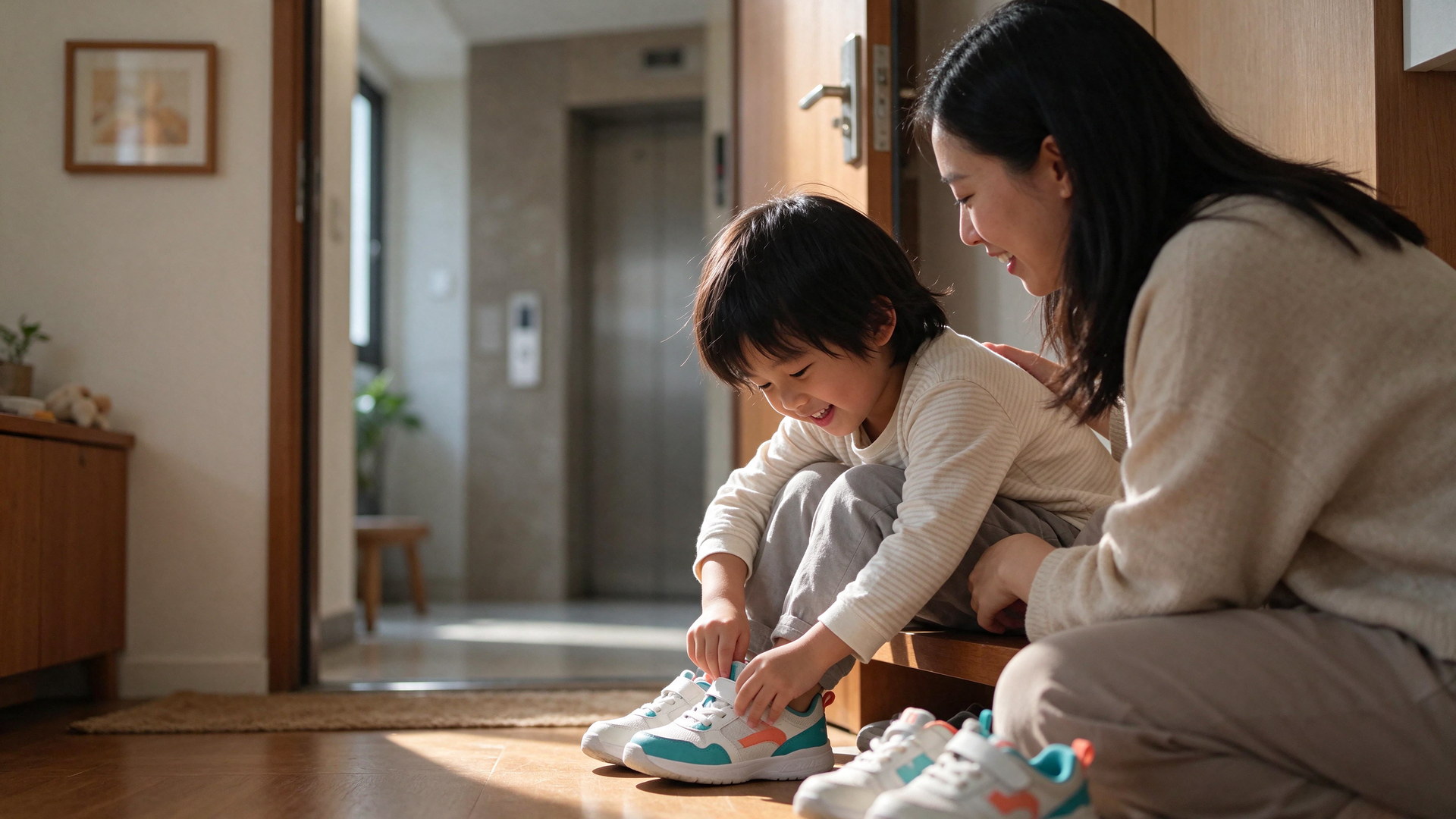
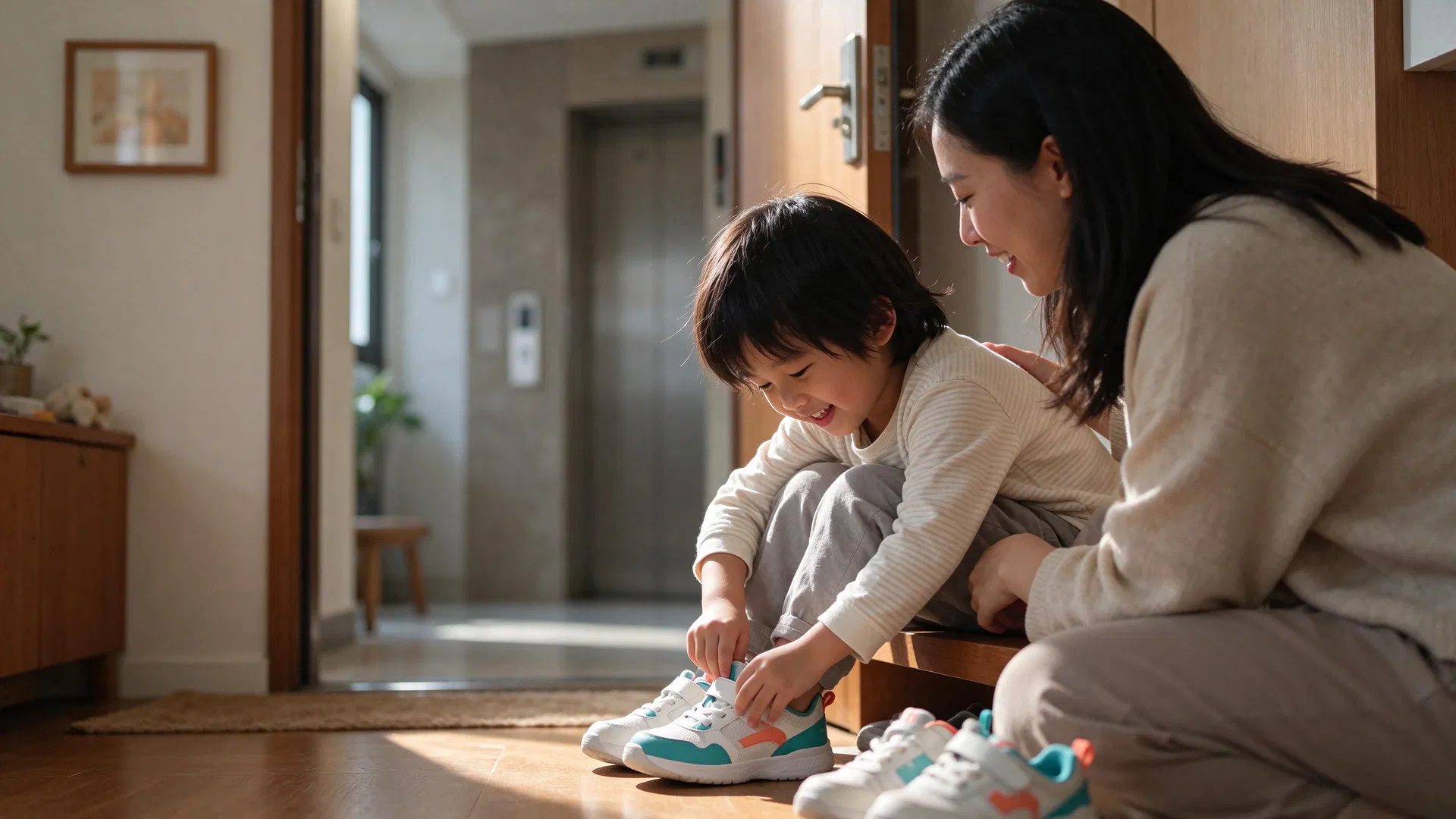
It's 8.15am. You've said "Put your shoes on" fourteen times. Your voice is getting louder, the shoes haven't moved, and somehow your child is now lying under the dining table.
Our founder Matt knows this scene well. Even after more than 20 years of coaching children aged 1.5–5, he still found himself losing the shoe battle at home every morning. Then he stopped giving the order and asked a question instead: "Who's going to press the lift button first?"
Shoes on. Out the door. Race to the lift. No raised voices.
It's the same trick every Minisport coach uses dozens of times a class, and it works far beyond the pitch. Here's why it works, how to use it, and a set of ready-made questions for the everyday battles that wear parents down most.
A quick note on ages: the ideas in this post work best with children aged around 3 to 5, once they understand enough language to enjoy a challenge or weigh up a choice. With under-2s, it's a different story. Ask a one-year-old "Who's going to press the lift button first?" and you're likely to get a blank stare, or a gleeful sprint in completely the wrong direction. For the youngest children, keep it simple: hold up two options to point at, sing your way through the routine, and lean on showing rather than asking. Between 2 and 3, simple either/or choices are a great place to start.
Why questions work
An order invites a "no"
Toddlers are discovering that they're separate people with their own opinions. Being told what to do is the perfect moment to test that out. A question sidesteps the standoff, because there's nothing to push against. The grown-up version: "Send me that report by five" versus "Do you think you could get that report over to me by five?" Same deadline. The first makes you want to drag your feet. The second makes you quietly want to prove you can.
A question hands over a little control
Young children spend most of the day being told where to go, what to wear and when to stop. A question gives them a small say, and a child who feels some control has far less need to grab it by refusing.
The grown-up version: being told your team's new plan, versus being asked how you'd tackle it. You'll back the second one, even if the plan ends up the same.
A question switches the brain on
An order needs nothing from a child except compliance, so it's easy to tune out. A question needs an answer, so your child has to stop, think and engage. That pause is often all it takes to break the loop.
The grown-up version: a presenter who reads off the slides, versus one who asks the room a question. You notice you've started listening.
A question turns a chore into a game
“Put your shoes on” is a task. “Who’s going to press the lift button first?” is a race, and every toddler wants to win a race. The job still gets done; it just stops feeling like a job.
The grown-up version: “Do 10,000 steps” versus a step challenge with friends. Same walking. Very different motivation.
A challenge taps into a built-in drive
The most powerful questions don’t just ask. They challenge: “Can you…?”, “Do you think you could…?”, “I bet you can’t…” And young children find challenges almost impossible to resist.
That’s no accident. Psychologists have long described a built-in drive to master the world. In the 1950s, Robert White called it “competence motivation”: the deep satisfaction of being able to make things happen. Self-determination theory, one of the most widely studied models of motivation, lists feeling capable as one of three core psychological needs. You can see it in any toddler who insists “Me do it,” or who builds a tower again and again just to knock it down and build it higher.
There’s a social side too. Research on young children’s pride, including work by Deborah Stipek and colleagues, found that around the age of two, children begin looking to adults after they succeed, checking that someone saw. Over the next few years, they start judging their own success too. A challenge feeds both: the chance to prove something to themselves, and the chance to show you.
The grown-up version: a colleague who says “I bet nobody can beat last month’s numbers.” Suddenly the whole team is trying.
In practice: “Can you get your coat on before I count to ten?” isn’t really about the coat. It’s an invitation to show off a little, and most toddlers will grab it with both hands.
Three questions that work (and one that doesn’t)
Not every question does the job. These three do:
The race. “Who’s going to be first to…?” or “Can you beat me to…?” Best for anything involving getting somewhere: the door, the car, the bath. Works best from around age 3.
The either/or. “Do you want the blue cup or the green cup?” Both answers work for you, and your child still gets to choose. Best for routines that tend to stall, like getting dressed or brushing teeth. Works from around age 2, especially if you hold up both options.
The job. “Who can help me find the car keys?” or “What do we need to pack for the park?” Children love being useful, and a job turns a passenger into a helper. Simple jobs work from around age 2; bigger ones from 3 upwards.
The one to avoid: a yes/no question where “no” isn’t really an option. “Shall we put your shoes on?” sounds friendly, but you’ve just offered a “no,” and you’ll almost certainly get one. If you’re not prepared to accept the answer, don’t ask the question. Use a race, a choice or a job instead.
Instead of… try…
Ready-made questions for the battles that come round every single day. Pick one, try it this week, and see what happens.
Leaving the house
Instead of: “Put your shoes on. Put your shoes on. PUT YOUR SHOES ON.”
Try: “Who’s going to press the lift button first?”
Or: “Can you get your shoes on before I find my keys?”
Leaving the playground or a party
Instead of: “Right, we’re going. Now.”
Try: “Do you want two more slides or three more slides before we go?”
Or: “What was the best bit today? Tell me on the way to the car.”
Finishing dinner
Instead of: “Eat your broccoli.”
Try: “Which tree are you going to eat first, the big one or the little one?”
Or: “How many bites do you think it’ll take to finish that piece?”
Tidying up
Instead of: “Tidy your toys. I’m not asking again.”
Try: “Can you get all the cars back in the box before the song finishes?”
Or: “Are you the blocks tidier or the books tidier today?”
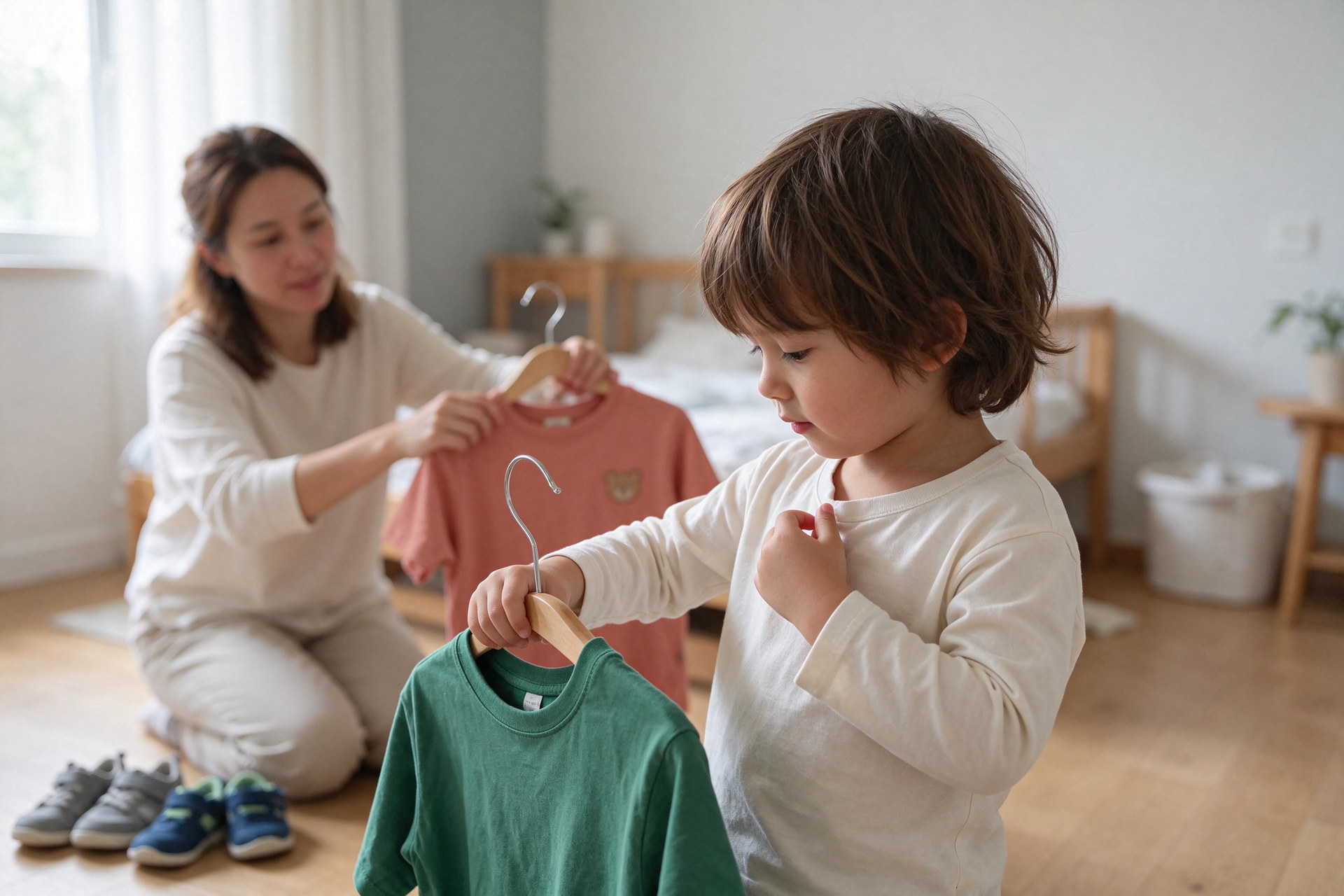
Getting dressed
Instead of: “Get dressed, we’re late.”
Try: “Dinosaur T-shirt or rocket T-shirt?”
Or: “Which goes on first, your socks or your trousers?”
Brushing teeth
Instead of: “Brush your teeth.”
Try: “Can you find the hiding broccoli in your back teeth?”
Or: “Do you want to brush first, or shall I go first?”
Bath time
Instead of: “Bath. Now.”
Try: “Do you want to hop or tiptoe to the bath?”
Or: “Which toy is coming in the bath tonight?”
Getting out of the bath
Instead of: “Out. The water’s getting cold.”
Try: “Can you climb out before all the bubbles pop?”
Or: “Big towel or small towel tonight?”
Bedtime
Instead of: “Bed. Lights off. No arguing.”
Try: “One story or two stories tonight?”
Or: “Can you get into bed before I count to ten?”
Into the car seat
Instead of: “Sit down and stop wriggling.”
Try: “Can you click your first buckle before I click mine?”
Or: “Which song are we playing on the way?”
Screens off
Instead of: “That’s enough. Turn it off.”
Try: “Do you want to switch it off, or shall I?”
Or: “Can you show me your favourite bit before we turn it off?”
Sun cream
Instead of: “Stand still, I need to put this on.”
Try: “Face first or arms first?”
Or: “Can you rub this bit in yourself?”
When a question isn’t enough: close the loop first
Sometimes even the best race or challenge falls flat. Your child isn’t being stubborn. The problem is that your child’s head is still in the middle of something else: a half-built tower, a game with a teddy, the last page of a book.
In those moments, stop asking about the next thing and ask about the current one instead:
“What needs to happen before we put our shoes on, so you feel happy to go?”
“Shall we finish this tower first, then shoes?”
“Where should Teddy wait for you until we get back?”
“Shall we take a photo of your Lego so it’s here when we’re home?”
Once the loop is closed, the next step usually comes far more easily.
Why it works
Psychologists have known for nearly a century that unfinished tasks stick in the mind. In the 1920s, psychologist Bluma Zeigarnik found that people remember interrupted tasks better than completed ones, because the brain keeps them “open.” This is now known as the Zeigarnik effect. Research on adults has found something similar: when we’re pulled away from an unfinished task, part of our attention stays stuck on it, which researcher Sophie Leroy called “attention residue.”
For young children, the pull is even stronger. Switching smoothly from one activity to another relies on a skill called cognitive flexibility, which is still developing in the early years. Some children find it much harder than others to let go of something mid-flow. Helping your child finish, pause or “park” the current activity clears whatever is still holding your child’s attention, and gives your child a say in how the moment ends.
The grown-up version: being dragged into a meeting halfway through writing an important email. You’re in the room, but your mind is still on that unfinished sentence.
In practice: if a question gets a flat “no” twice, don’t ask a louder version. Ask what needs to happen first. A two-minute detour to finish the tower is often quicker than a twenty-minute standoff. This one works best once children can talk about what they’re doing, usually from around age 3.
How our coaches use it in class
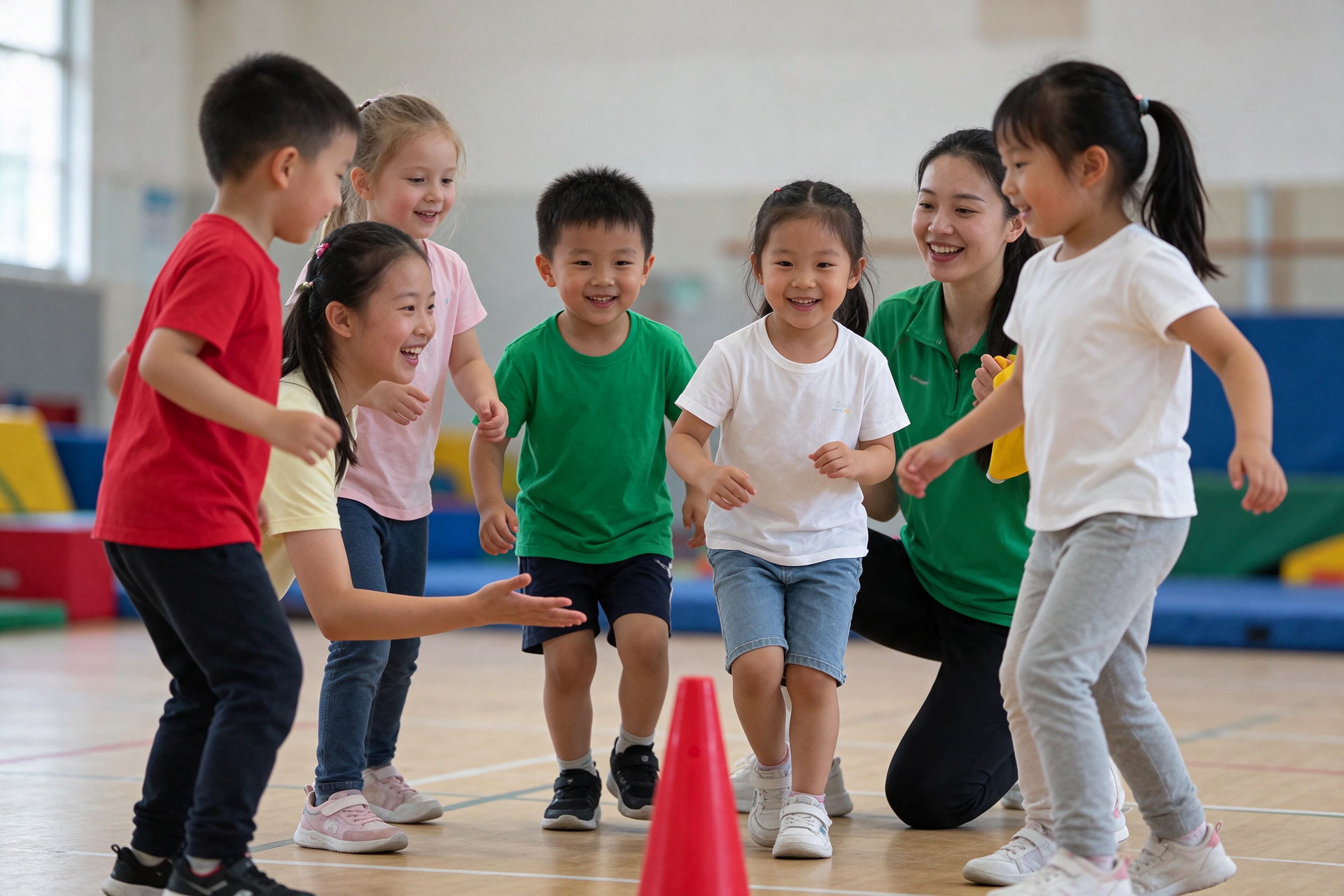
Asking instead of telling is one of the golden rules every Minisport coach learns, and it runs through every session. A few you might hear:
“Who can get to the red cone first?” instead of “Run to the red cone.”
“Can you balance like a flamingo until I count to five?” instead of “Stand on one leg.”
“Who’s got the quietest feet in the room?” instead of “Stop stomping.”
“Where do you think the ball should go next?” instead of “Pass it there.”
“Who can find their pancake before I count to three?” instead of “Go and sit down.”
The result is a group that’s moving, thinking and choosing to join in, rather than a group waiting to be told what to do. It’s also why your child might happily do something for a coach that gets a flat “no” at home. The coach asked.
When an order is the right call
Questions are a brilliant default, not a rule for every moment. Give a clear, calm instruction instead when:
Safety is on the line. Near a road, a pool or a hot oven, it’s “Stop” or “Hold my hand,” not a question. Save the games for when everyone’s safe.
It isn’t up for debate. Car seats, seatbelts and medicine aren’t choices. You can still offer a choice around the edges (“Which arm goes in first?”), but not about whether it happens.
You’re stacking too many. Three questions in a row starts to feel like a quiz. One good question beats five rushed ones.
It’s been asked and answered. If you offered a choice and your child picked, follow through calmly. Re-asking teaches children that answers can be renegotiated.
Tone matters too. A question asked through gritted teeth is still an order. Keep it light, and if it doesn’t land, try a different question rather than a louder one.
Pick one battle this week
You don’t need to rewrite every sentence you say. Pick the one daily battle that drains you most, whether it’s shoes, bath or bedtime, and swap the order for a question every day this week.
Give it a few days. Children are quick to spot a new game, and once the lift button becomes the goal, the shoes tend to look after themselves.
Next up: why your child listens to the coach but not you, and the other coaching tricks you can borrow at home.
Our brand-new Minisport Hub is officially open, offering summer camps, weekend drop-ins, and Term 1 classes in a fun, safe, and modern environment. We’re also excited to share we have introduced cricket to term 1, refreshed our coaches’ first aid skills, and enjoyed a team day out. Plus, we’re expanding globally — Minisport Taiwan is launching soon!
While caffeine is a common part of many adults’ daily routines, even small amounts can pose serious health risks for young children. This guide explains why children are especially vulnerable to caffeine’s effects, outlines safe intake limits by age group, and helps parents make informed choices to protect their child’s health.
A concise, practical guide to helping toddlers learn to catch: start with tracking and blocking, use easier equipment, practise at the right level, and finish while it is still fun.
The most common elbow injury in toddlers comes from the most innocent moment — swinging them by the hands. Here's the science, the signs, and the simple swap every parent needs to know.
Flying with a toddler is often a recipe for stress — but it doesn’t have to be. From navigating HKIA’s busy terminals to keeping your little one entertained at 30,000 feet, this guide shares surprising hacks to make your next flight smoother and preserve your sanity.