Why Your Toddler Can't Catch — and What You Can Do to Help
By Matt, Founder · 5 min read
🎧 Listen to this article
▶ English, read by Matt (10 min)
▶ 廣東話 (11 min)
10-second takeaway
Catching is a complex, multi-step skill. Start with tracking, then blocking, then catching. Use balloons or soft balls, get down to your child's level, count after the throw, and finish on a success before frustration arrives.
Catching can look simple to adults, but it asks young children to combine visual tracking, body positioning, timing and hand control all at once. If your toddler struggles, it does not mean they are not trying. It may simply mean they are still working on one of the earlier steps.
Catching develops in stages
Before catching comes tracking: following a moving object with the eyes. A two-year-old may watch the ball carefully and still not move their hands. That is not failure; tracking may be taking up their full attention.
Next comes blocking. Children often stop an incoming ball with their chest, forearms or whole body before they can close their hands around it. Celebrate this response. It shows that they have connected the incoming object with the need to react.
Catching is the final stage: closing the hands around a moving object at the right moment. If your child is still blocking, stay there and make that stage enjoyable. The catch will come with time.
Count after the throw
Many adults count down before throwing: one, two, three, and then the ball leaves their hands. It feels helpful, but once the ball is moving, the countdown has finished just when the child needs help with timing.
Try releasing the ball first, then counting calmly and rhythmically as it travels towards your child. This keeps your voice connected to the ball's movement and gives your child a cue for when to respond.
Use the count as a gentle guide, not a test. Some children will react early and others will need more time. Adjust the speed and distance rather than expecting the same response every time.
Get down to their level
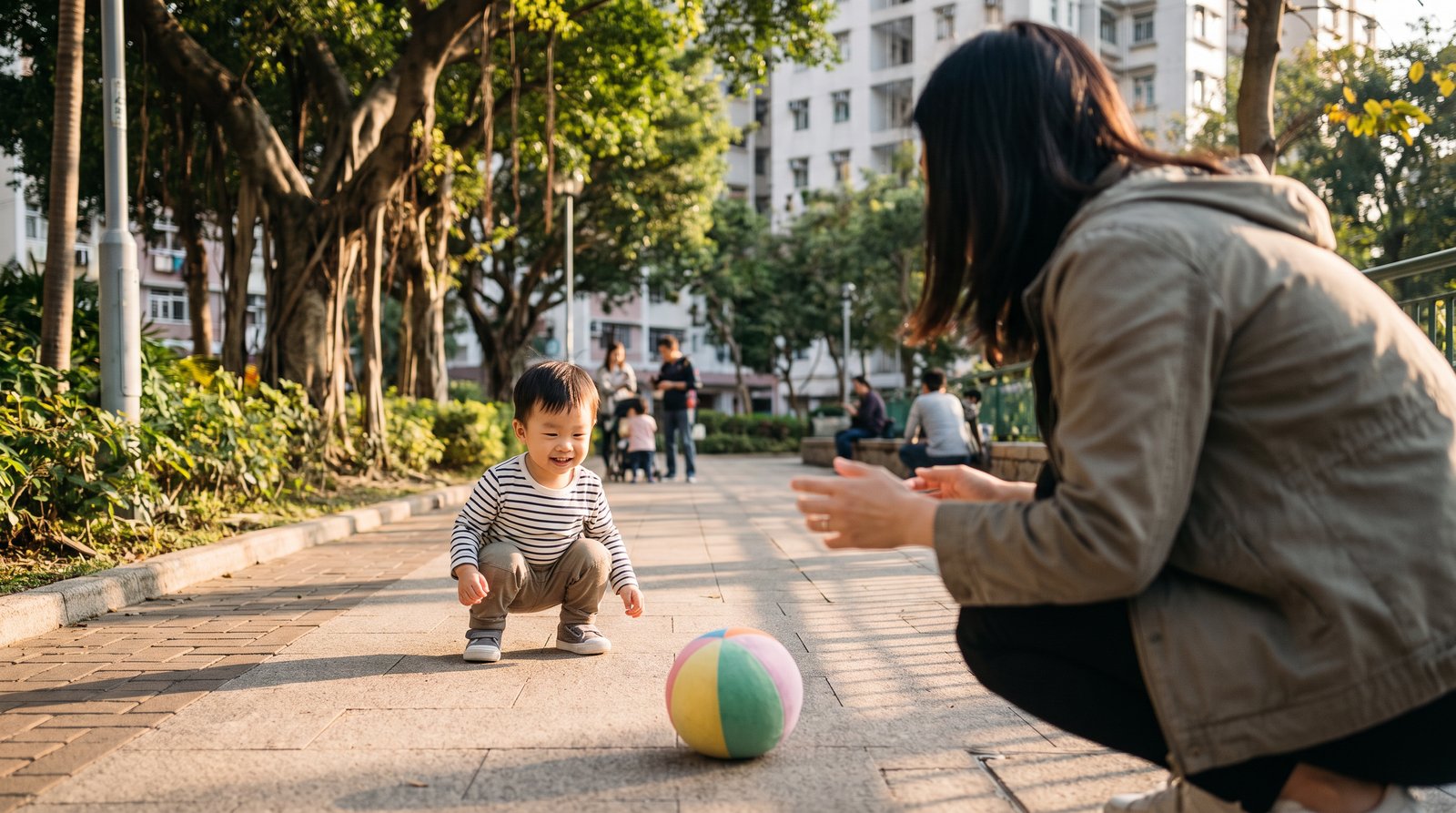
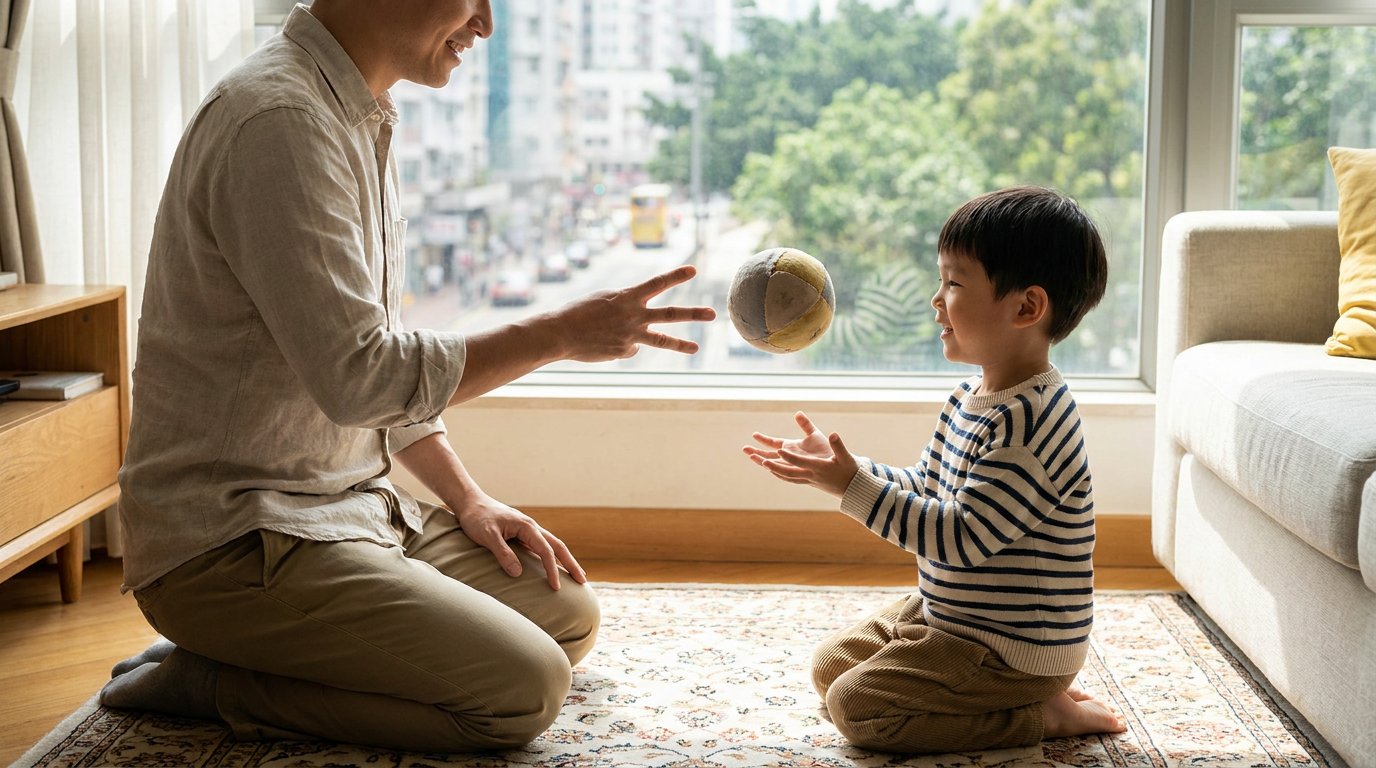
When an adult throws from standing height, the ball may drop steeply towards a young child's hands. Try kneeling or sitting so the ball travels on a flatter, more direct path, closer to the child's eye and hand level.
It is a small adjustment, but it can make the incoming ball easier to see and easier to receive. Keep the throw gentle and from in front of the child so the activity remains about receiving, not throwing.
Make the equipment easier first
A useful progression is balloons, catching cloths or scarves, large foam balls, beach balls, and only then standard playground balls. Balloons float and give children more time to track, position themselves and respond.
The jump from a balloon to a regular ball may feel small to an adult, but it can be a big change for a developing visual system. Start at the easier end of the progression and make it harder only when your child is ready.
What to practise at two
At two, begin with hand transfers rather than a free-moving throw. Hold the ball and slowly move it towards your child so they can take it directly from your hands. This builds the connection between a cue and a physical response without adding a flight path.
Keep balloons and catching cloths within about one metre, get down on your knees, celebrate blocks and attempts, and keep practice to around five minutes. Finish while your child is still engaged.
What changes around three
Around three, many children begin to show more anticipatory movement: shifting their weight, raising their arms or preparing their hands before the object arrives.
Introduce large foam balls alongside balloons. Rolling the ball along the floor slows the task down and gives your child more processing time. You can also introduce “ready hands” by asking them to show you their hands before you roll or throw.
What to practise around four
By four, many children can begin catching appropriately sized equipment. They may start moving towards the ball rather than waiting for it to arrive directly at them.
Progress gradually from foam balls to lightweight playground balls. As timing becomes more secure, reduce the post-throw counting so your child can begin to own the timing themselves.
Pause after a successful catch
After your child catches the ball, ask them to freeze for two seconds before throwing or rolling it back. This short pause helps them notice where their hands and body are and what a successful position feels like.
Finish while it is still fun
If your child is done, they are done. Pushing past willing engagement does not build skill; it can make the activity feel like work.
If catching is too hard on a given day, step back to blocking. If blocking is too hard, step back to tracking. Swap the ball for a balloon without making it a big deal, and engineer the final exchange so your child gets a success to take away.
The best time to finish is often just before your child wants to. Children build confidence when they keep coming back because the activity still feels enjoyable.
Start with a balloon. Get down on your knees. Count after the throw. The rest will follow.
This article is general coaching guidance, not a developmental assessment. Children develop at different rates. If you have concerns about your child’s movement or coordination, speak with a qualified health professional.
A concise, practical guide to helping toddlers learn to catch: start with tracking and blocking, use easier equipment, practise at the right level, and finish while it is still fun.
Our brand-new Minisport Hub is officially open, offering summer camps, weekend drop-ins, and Term 1 classes in a fun, safe, and modern environment. We’re also excited to share we have introduced cricket to term 1, refreshed our coaches’ first aid skills, and enjoyed a team day out. Plus, we’re expanding globally — Minisport Taiwan is launching soon!
While caffeine is a common part of many adults’ daily routines, even small amounts can pose serious health risks for young children. This guide explains why children are especially vulnerable to caffeine’s effects, outlines safe intake limits by age group, and helps parents make informed choices to protect their child’s health.
The most common elbow injury in toddlers comes from the most innocent moment — swinging them by the hands. Here's the science, the signs, and the simple swap every parent needs to know.
Flying with a toddler is often a recipe for stress — but it doesn’t have to be. From navigating HKIA’s busy terminals to keeping your little one entertained at 30,000 feet, this guide shares surprising hacks to make your next flight smoother and preserve your sanity.
In this post, we break down our new graduation system, our three development pillars, why the programme now ends at age five, and what’s changing in Term 1 — from themed games and app resources to new coaches, new equipment, and free beach events for Term 1 enrolled families.